
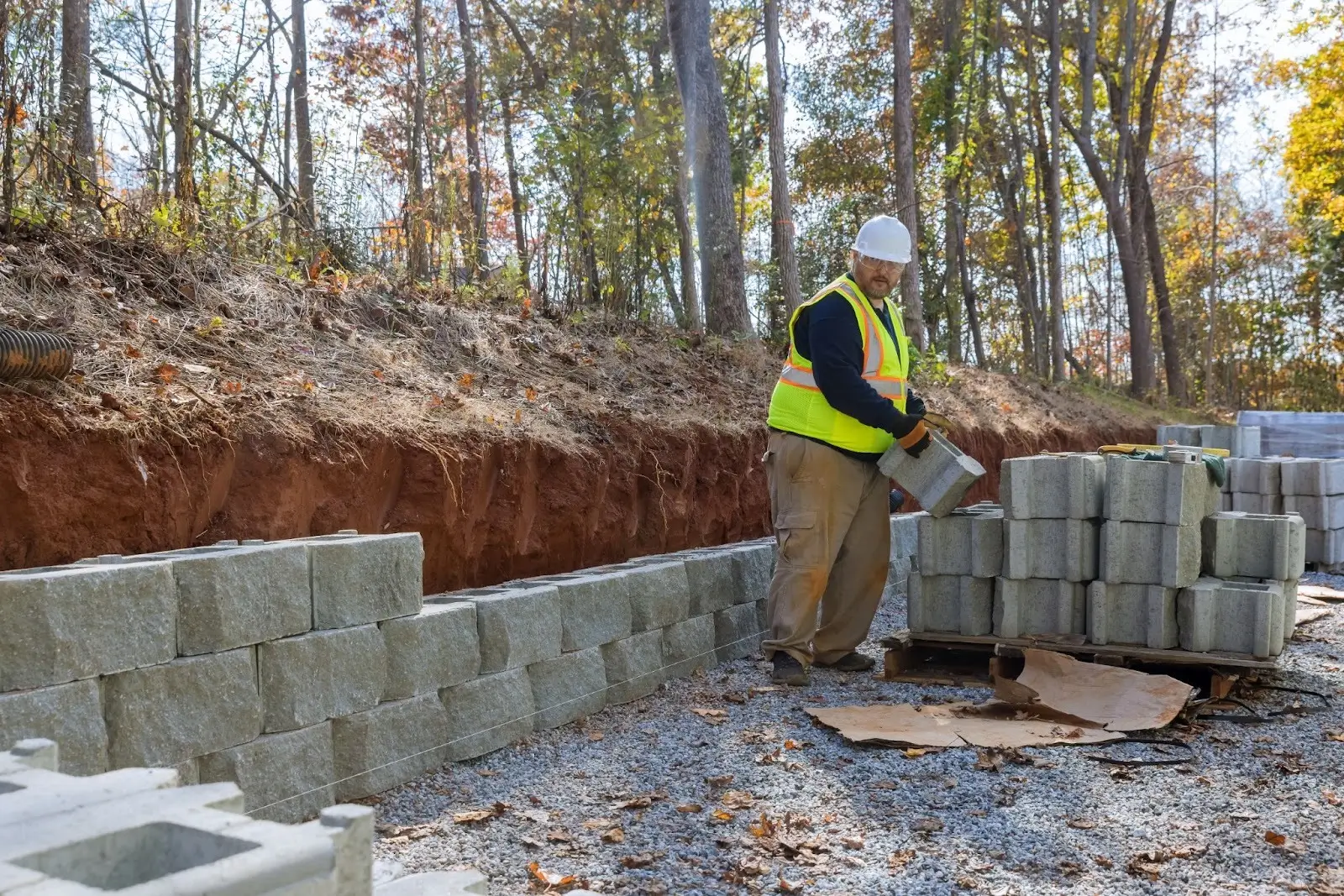
Sloped lots can be beautiful, but they also introduce serious structural challenges. Soil wants to move downhill, water follows gravity, and any outdoor living space you build must counter both. That’s where concrete retaining walls step in. Engineered and constructed correctly, these structures convert unusable grades into stable terraces, protect foundations from lateral pressure, and manage drainage so your landscape and hardscape last. Below, we break down the specific ways concrete retaining walls enhance the strength, safety, and long-term value of inclined properties.
Why Concrete Retaining Walls Change What’s Possible on a Slope
When your lot pitches sharply, every improvement must overcome the effects of gravity and groundwater. Concrete retaining walls provide the mass, stiffness, and continuity needed to resist soil movement while creating level platforms for patios, pathways, and planting beds. Unlike temporary landscape edging, they function as structural barriers that transform steep terrain into functional tiers. By stabilizing the hillside, they also reduce the risk of erosion, protect nearby structures, and expand your usable square footage in ways that timber or dry-stack options rarely match over time.
How Concrete Retaining Walls Manage Lateral Earth Pressure
Soil exerts lateral pressure that fluctuates in response to changes in moisture, surcharge loads, and seismic activity. Concrete retaining walls are designed to counter those forces through a combination of weight, footing width, wall batter, and reinforcement. The wall resists sliding with friction at the base, overturning with a widened footing and proper heel length, and internal cracking with steel reinforcement. For taller walls or poor soils, engineers may specify additional measures such as geogrid tiebacks to engage more of the retained soil mass. The result is a system that stays put even as conditions change seasonally.
Drainage Design With Concrete Retaining Walls
Water is the hidden enemy of every slope. Even the strongest structure fails if hydrostatic pressure builds behind it, so drainage is non-negotiable.
Weep Holes and Free Draining Backfill
Weep holes along the face and a gravel backfill allow water to exit rather than push on the wall.
Geotextiles Keep Soil Stable
A geotextile layer separates fines from the drainage aggregate, preventing clogs that trap moisture.
Subdrains Protect the Base
A perforated subdrain at the footing collects water and routes it to daylight or a storm line.
Foundation and Footing Considerations for Concrete Retaining Walls
A wall is only as reliable as what it stands on. For sloped properties, excavation must reach undisturbed native soil or engineered fill with adequate bearing capacity. Footings are typically wider than the wall, extending beneath the backfill side to counter overturning. On steep grades, stepped footings maintain consistent embedment while following the terrain. Proper compaction under the footing and along the backfill zone reduces settlement risk, and frost-depth embedment prevents heaving in cold climates. Attention to base conditions is the difference between a wall that lasts decades and one that creeps or cracks within a few seasons.
Concrete Retaining Walls Reinforcement Strategies
Reinforcement provides concrete with a tensile capacity where bending stresses are most prevalent.
Rebar Placement Controls Cracking
Vertical and horizontal bars concentrate where bending is highest, limiting crack width and spacing.
Jointing Allows Movement
Control and expansion joints manage shrinkage and temperature movement to preserve the wall face.
Geogrid Extends the Structure
In reinforced soil walls, geogrid layers tie the face into the backfill, creating a unified gravity system.
Tiered Landscaping Made Possible by Concrete Retaining Walls
Terracing is a practical method for mitigating elevation changes while distributing loads across multiple structures. With concrete retaining walls, you can build staggered levels that reduce the height and pressure demand of each wall, making drainage easier to manage between tiers. Those level benches become patios, play areas, garden beds, or pathways that link upper and lower yard spaces. By thoughtfully stepping the site, you also create more daylight and airflow across the landscape, which improves plant health and reduces surface water concentration in any single zone.
Concrete Retaining Walls Durability and Weather Resilience
Longevity is a key advantage on exposed hillsides where materials take a beating from sun, wind, and rain.
Freeze-Thaw Durability
Air-entrained mixes and proper drainage prevent spalling when temperatures cycle below freezing.
Resistance to Fire and Pests
Concrete is noncombustible and impervious to insects, rot, and fungal decay typical of wood systems.
Safety Codes and Permitting for Concrete Retaining Walls
Many jurisdictions require permits for walls exceeding a specified height or when loads from buildings, driveways, or slopes are applied to the retained soil. Codes address setbacks, drainage provisions, and global stability to protect both adjacent properties and your own. On sloped sites, geotechnical input is often prudent to assess soil type, groundwater, and potential slip planes. Following these requirements isn’t just about compliance; it ensures your wall’s design accounts for real-world forces so it performs as intended under heavy rain, seismic events, or long-term creep.
Concrete Retaining Walls Lifecycle Cost Advantages
The initial construction cost of concrete can be higher than that of lightweight alternatives, but lifecycle economics favor the material on challenging grades. Low maintenance, long service life, and stable performance under varying moisture conditions result in reduced repair and replacement cycles. Good drainage and reinforcement minimize cracking, preserving aesthetics and function without the need for constant patching. Adding the property value created by usable terraces and safer slopes, the long-term return typically outweighs the upfront premium. Over the decades, fewer failures and less rebuilding result in actual savings.
When To Hire a Pro for Concrete Retaining Walls
DIY can work for small garden borders, but structural walls on steep lots merit engineering and experienced crews.
Signs of Slope Instability
Deep cracks, leaning fences, or boggy soils suggest movement that needs professional evaluation.
Complex Loads Require Engineering
Driveways, structures, or vehicle surcharges add forces that demand stamped calculations and detailing.
Concrete Retaining Walls Provide a Stronger, Safer Landscape
Sloped properties reward sound engineering. With mass, reinforcement, and drainage working together, concrete retaining walls stabilize grades, protect structures, and open space for living and landscaping. They convert rugged terrain into durable terraces while managing water and resisting seasonal change. For homeowners seeking to create outdoor spaces that endure, few investments offer as much structural integrity and long-term peace of mind as well-designed concrete retaining walls. When the site is steep and the stakes are high, choose the system built to hold the hillside for the long run.
Visit our MMM Concrete blog to learn more about concrete retaining walls and how they fit into your yard.